
Ongoing Stream Restoration at Drala Mountain Center
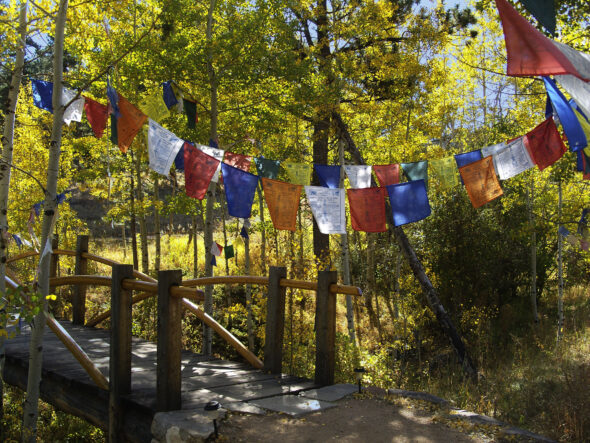
Drala Mountain Center has previously helped pave the way with data, experimental techniques, and dedication to the health and restoration of our wild spaces. The land at Drala Mountain Center is one of our most important assets, both for its raw natural beauty, its sacredness, and for the decades of practice that have become a part of the environment.
In 2020, as many of you already know, significant portions of our campus were impacted by the Cameron Peak Fire, including the main stream running through the land and into Lake Shunyuta.
With the help of our longtime volunteer, resident, and past staff member, Dickie, we have been working with Larimer Conservation District, who has further partnered with the Coalition for the Poudre River Watershed (CPRW), to study the stream and launch restoration efforts to help recover from the fire damage.
To date, LCD and CPRW have mapped the affected areas of the stream and surrounding watershed, and created plans for the restoration process. However, the actual restoration work won’t begin until later this year, in July.
That delay isn’t because of logistics, supply limitations, needed labor, or other restrictions. Instead this early planning and monitoring phase is part of larger research plans which will provide meaningful data on the effects of low-tech stream restoration techniques.
Those data are critical, not just for monitoring the success of our project, but also for quantifying the impact on the local ecology, watershed, and water quality, and will also help us determine the downstream impacts of a restoration project like ours.
Much like how innovative forest treatments helped cool the Cameron Peak Fire, when it hit previously treated areas, in 2020 – the Larimer Conservation District, the Coalition for the Poudre River Watershed, and Drala Mountain Center all hope this project will help other stream and river restoration efforts elsewhere.
In the first phase of restoration, beaver dam analogs will be installed along the stream. These man-made structures mimic the natural impact of native beavers. The dams will help spread the stream’s water over larger areas, and also help retain water longer between periods of precipitation or snow melt. This helps not only provide water for local flora and fauna, but assists with nutrient cycling, recharging groundwater, and reducing the flow of sediment downstream.
DMC, LCD, and CPRW all hope that these improvements also provide the necessary conditions and habitat for beavers that historically lived in and helped maintain the stream to return to the land.
40 of these structures will be installed over the course of the project, and may be accompanied in places by protective fencing to keep moose, elk, and even stray cattle from overbrowsing the restoration area during these delicate early stages.
All told the project is planned to help restore and enhance 16 acres of land at Drala Mountain Center, with monitoring to see how it also impacts and benefits downstream ecosystems and water quality.
Projects like these aren’t simply an important part of our stewardship of the land at Drala Mountain Center. They are also one way Drala Mountain Center can contribute to the future of land restoration projects, providing data that informs projections and expectations for similar projects, and which might even be used to help secure critical funds for this type of restoration work.
Special thanks to Alyssa Graziano with the Larimer Conservation District for providing more detailed information about the project, and to everyone at the Larimer Conservation District, Coalition for the Poudre River Watershed, and all the volunteers helping make this stream restoration a reality.
We look forward to seeing the first phase of the project implemented this summer!