Meditation & Creativity
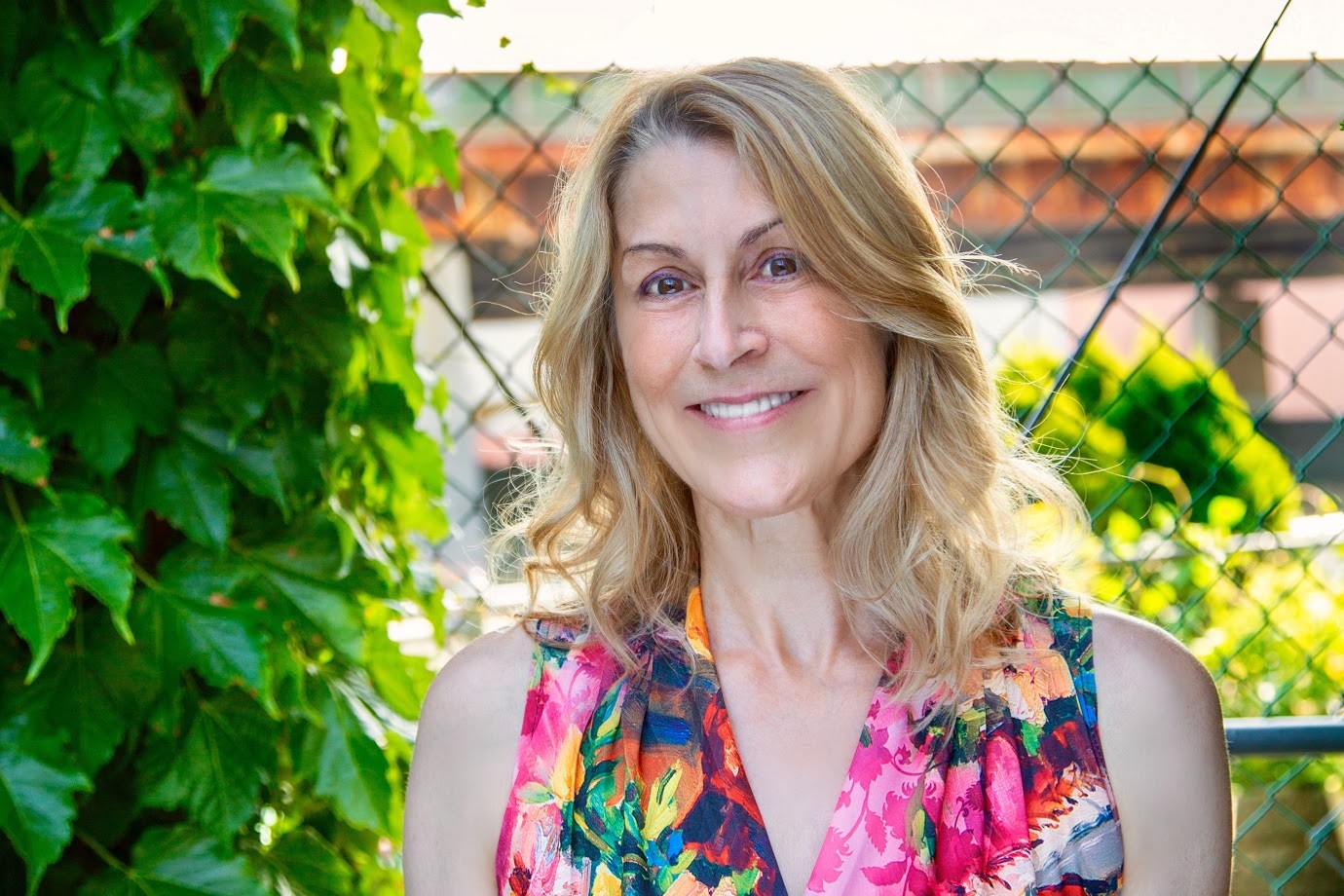
 New York Times bestselling author Susan Piver will be teaching an Open Heart Retreat April 5-8 at the Shambhala Mountain Center. Susan discovered the dharma in 1995 after reading books by Chogyam Trungpa and Sakyong Mipham Rinpoche, who is now her teacher. According to her website, she practices a formal sitting meditation, acting right, being nice, digging deep, and forgiving herself when she screws up. Susan writes for the Huffington Post and has written five books, including her most recent, “The Wisdom of a Broken Heart.” Susan has generously allowed us to reprint this article. For more information on her retreat, visit our website.
Yesterday I read a tweet from someone looking for advice about taking up meditation for creative reasons. I don’t know this person and I’m not sure what they were looking for, but it started me thinking on what I would say if he asked me directly.
Some of you may know that I lead meditation and writing retreats that are about reconnecting with our own creativity and, beyond that, with the moment of inspiration. And after all, what is creativity exactly, besides a continuous series of moments of inspiration? Which begs the questions: what is inspiration and where does it come from? Can my meditation practice help?
When it comes to the latter question, the answer is “absolutely” and “of course not.”
To get to the reason for this interesting dichotomy, let’s look at the former question: what is inspiration and where does it come from?
Begin by asking yourself: “If I had to come up with one word that was a euphemism for inspiration, what would it be?”
Perhaps you’ll come up with something like “motivated” or “connected” or “awed.”
Fascinatingly, wiktionary offers us this definition: To infuse into the mind; to communicate to the spirit; to convey, as by a divine or supernatural influence; to disclose preternaturally; to produce in, as by inspiration. And this: To draw in by the operation of breathing; to inhale.
At no point is the definition offered: “to be clever” or “to impress.” Rather, the definitions allude to something far more simple, receptive, and intimate.
When I think of inspiration, the word that comes to me is “clarity.” Suddenly I see something that I hadn’t seen before—not because it wasn’t there, but because I simply hadn’t noticed it before. To me, this means that inspiration comes, not from conquering new horizons of thought or acquiring skills I had been lacking, but from relaxing into a more spacious view. This is why our most interesting inspirations almost always happen when we do not expect them, while showering, or dreaming, or driving. When we stop striving—even to be more creative, relaxed, or intelligent—moments of clear seeing are more likely.
Of course our meditation practice teaches this exact skill: that of relaxing our minds by resting attention on breath without agenda. The moment we apply an agenda to our meditation practice, even a great one like practicing in order to be more creative, its energy is drained. When we practice in a way that is both free and disciplined (the discipline of not applying an agenda), our innate brilliance is unleashed and in this way, mental and emotional innovations (aka inspiration) arise spontaneously.
One of the greatest teachers ever of the Enneagram (about which I am passionate), Chilean psychiatrist and brilliant thinker Claudio Naranjo, said about music, “Only repetition invites spontaneous innovation” and of course this is true of all the arts. You can’t sit down at your computer or pick up your guitar or paintbrush and command yourself to innovate. Much sloppiness results from such an approach, unless you just happen to get lucky. But we can do better than hoping to get lucky in art by learning to work with our minds skillfully and openly. Meditation is a very powerful way to do so—but only if it is practiced free from any and all agendas. At this point, one’s vision expands.
So, can meditation help you become more creative: Definitely. And no way.