• Blog
  • Contact Us
    • Contact a Guest
    • Guest Services Contacts
  • Privacy Policy
Drala Mountain Center
  • Retreats
    • All Retreats
    • The Buddhist Path
    • Meditation & Mindfulness
    • Creative Expression
    • Yoga & Wellness
    • The Natural World
    • Foundations Retreats
    • Online and Hybrid Retreats
  • Rent Our Venues
  • Solo Retreat
  • Jobs/Volunteer
    • Volunteer
    • Join Our Staff
  • ABOUT
    • Mission and Values
    • Campus
      • Grounds & Facilities
      • Group Spaces
      • Visiting
      • Traveling to Drala Mountain Center
      • Rideshare
      • Lodging / Rates
      • The Great Stupa of Dharmakaya
      • DMC Virus & Flu Protocol
    • Our Living Lineage
    • Meet Our Leadership
    • The Governing Council
    • Financial Assistance
    • Eco-Forestry Work
    • DMC Press Center
  • Donate
  • Click to open the search input field Click to open the search input field Search
  • Menu Menu
  • Link to Facebook
  • Link to Instagram
  • Link to Youtube

Ikebana: The Contemplative Art of Flowers

Creative Expression, Mind-Body

By Alexandra Shenpen, Sensei and Travis Newbill

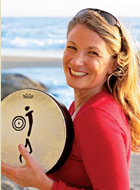
Shenpen, Sensei will be guiding Ikebana/Kado: The Contemplative Art and Way of Flowers, April 18-20, 2014

Alexandra Shenpen

Alexandra Shenpen

Ikebana is more than just flower arranging. Rather, it is a practice through which we explore nature & life,  the relationship between heaven, earth, humanity and personal artistic process — whether we feel we are artistic or not!  We begin by learning traditional, harmonic forms. Engaging with Ikebana as a contemplative practice awakens the unconditional beauty of  our world,  inspiring a way of living.

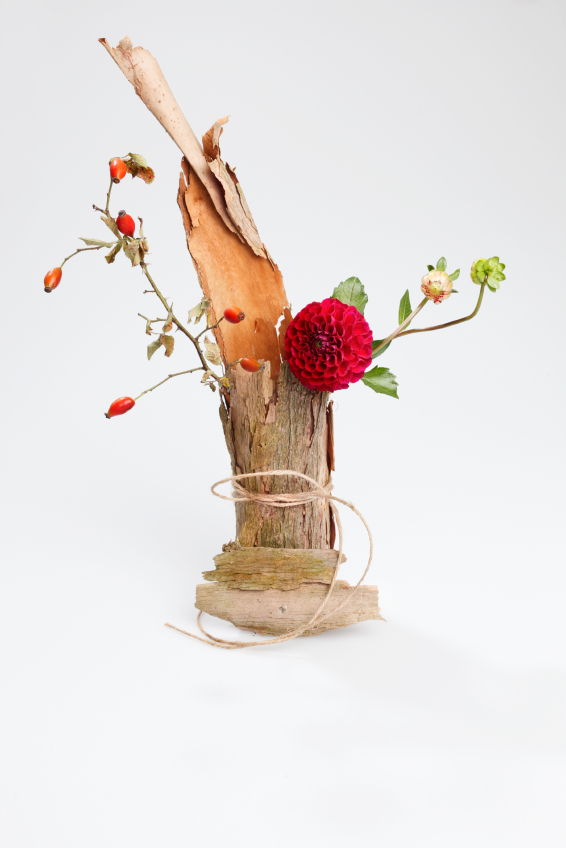
Below are some words from our wonderful teacher, Alexandra Shenpen, Sensei and some images of arrangements created by introductory students.

On structure and improvisation:
“Forms tame us, helping us to wear-out our artistic ego, so that what comes through is fresh and awake, an expression of  what’s already there — both in ourselves and in nature.  This is a wonderful ground for later improvisation.   In other words, structure provides a language of flowers — and from that language, not only can the poetry of botanical materials communicate more vividly, but one can begin to play.  Ultimately, the plants speak for themselves, if we understand their presence in space.”

DSCN0137

“Ikebana, as a non-verbal art form, allows us to let go of  thoughts and judgments that can cloud the way we see the world.  By  really looking at a branch, a twig, a flower, we can discover how to look , that we  might truly see, and fully appreciate what’s there.  The flowers and branches find their own place harmoniously.  When we begin to taste that  experience, isness–things as they are–renews our real heart.  Ultimately, when we are experiencing the vivid inseparability of form and emptiness, we feel very alive,  in touch with ourselves and phenomena.  It quite goes beyond words.  Art  embodying that is very helpful to have in the world.”

P1080116

Flower as guest:
“Human beings have a universal soft spot for plant life, for the beauty of nature. Just holding or looking at a flower touches that soft spot. Once flower or branch has been cut, it is no longer being sustained by its own way of growing. It is in our care. Being considerate of the flower’s needs comes naturally when our soft spot is open.”

SAMSUNG DIGITAL CAMERA

“Every Choice is an Artistic Choice” — Ernie Porps/Chogyam Trungpa, Rinpoche
“Ikebana can be a positively dangerous contemplative art ——     it can change your life! It becomes harder to not notice. Our natural instinct is to be awake and care for our world  —  noticing,  appreciating, and engaging aesthetically. How we get dressed, or how the dishes go in the dish rack — becomes more of an ongoing creative  process, rather than just something to put up with.”

DSCN0160 C

“Ikebana/Kado honours the sense of above, below, and in between- – –  below is not lesser than above and above is not greater than below, and in between is not “not as good as” or “better than” something else. Those are human neuroses which are rampant in the world and in ourselves. Some liberation from that takes place when we create a living piece.   We come to recognize that each element has its own place, creating a harmonious whole.    This really interrupts our conventional way of thinking about things.”

~~~

Finally, a testimonial from David, a student of Shenpen, Sensei:

“Whether to choose this blossom, or that branch has been an absolutely safe place to be daring. The most dreadful consequence has been total collapse (of my flower arrangement) – something I have found I can live with! After a year I am beginning to bring this development of felt-sense into my larger world. I find it easier to move with confidence and trust myself. Who would have ever thought that arranging flowers could have such potential for informing my life? The fresh perky blooms are rubbing off!”

Alexandra Shenpen, Sensei will be leading Ikebana/Kado: The Contemplative Art & Way of Flowers, April 18-20, 2014. To learn more, CLICK HERE
February 27, 2014
Tags: Alexandra Shenpen, Art, ikebana
Share this entry
  • Facebook
  • Link to Instagram
  • Link to Youtube
https://www.dralamountain.org/wp-content/uploads/2012/03/AShenpen.jpg 190 140 admin https://www.dralamountain.org/wp-content/uploads/2023/05/Drala-logo-1.jpg admin2014-02-27 19:00:402023-05-09 12:53:04Ikebana: The Contemplative Art of Flowers
You might also like
Dakini Map: A Conversation with Cynthia Moku
Healing Sound: A Conversation with Christine Stevens (Video/Audio)
Sound and the Subtle
WATCH: Susan Piver on Writing, Magic, and Meditation
Q&A: Naropa Professors Discuss “Artistic Process as Life” and Meditation Practice
Watch: Chapman University at SMC
The No-Selfie: Miksang Contemplative Photography
[Video] Susan Piver Discusses Meditation and Writing
Search Search

Recent Posts

  • Ongoing Stream Restoration at Drala Mountain Center
  • Guru Rinpoche Statue Consecration and Dharma Talk
  • Happy Magha Puja!: Celebrating a Way of Life by Santi
  • Amaterasu Omikami, The Sun Goddess Comes to Colorado by Valerie Lorig
  • Restoring the Heart of the Valley: Riparian Renewal at Drala Mountain Center

Recent Comments

  • The 8 Best Meditation Retreats in the United States - wheretoaround on The Great Stupa of Dharmakaya
  • Michael Gayner on Our Direction for Drala Mountain Center
  • Michael Gayner on Our Direction for Drala Mountain Center
  • Mark Carter on Our Direction for Drala Mountain Center
  • Chodpa on Thoughts on Mahamudra Retreats

Archives

Categories

  • Compassion
  • Creative Expression
  • Daily Practice
  • Death
  • Donor Development
  • Enlightenment
  • Governing Council
  • Land Updates – What's Happening At DMC
  • Leadership
  • Life at SMC
  • Lojong
  • Meditation
  • Mind Training
  • Mind-Body
  • Mindful Living
  • Mindfulness
  • Nature
  • News / Announcements
  • Relationships
  • Resources for Meditation: Articles by Loden
  • Retreats at Drala Mountain Center
  • Self Care
  • Self-Care
  • Social Engagement
  • Solo Retreats
  • Testimonials
  • The Buddhist Path
  • Tibetan Medicine
  • Uncategorized

Visit

  • Traveling to Drala Mountain Center
  • Rideshare
  • Gift Certificates

Giving

  • Donate
  • Volunteer

Policies

  • Rates, Payments, Cancellations
  • Children
  • Land Rules
  • Liability Release
  • Code of Ethics
  • Whistleblower Policy
  • Anti-Discrimination Policy
  • Virus & Flu Safety Policy
  • Financial Assistance
  • Recording Release
  • Rental Guest Terms and Conditions

Contact

  • Address

    Drala Mountain Center
    151 Shambhala Way
    Red Feather Lakes, CO 80545

  • Phone

    1-970-881-2184

  • Email

    frontdesk@dralamountain.org

  • Join Our Staff

  • Program Proposal Form

  • Media Requests

  • Join Our Affiliate Program

© 2026 Drala Mountain Center:: Website by Integritive Web Design :: Asheville, NC | Privacy Policy | Terms and Conditions
Scroll to top Scroll to top Scroll to top